Summary

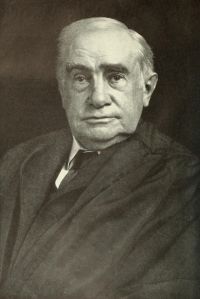
Portrait of Henry Billings Brown Henry Billings Brown Fee v. Brown — Opinion of the Court

Granting to each head of a family, in fee simple, a reservation of eighty acres of land, to be selected in the territory ceded, so soon as surveys shall be completed, by those entitled, which said reservations shall be patented by the president of the United States, and the patent therefor shall expressly declare that the said lands shall not be alienated or leased by the reservees,' etc.
Source: Wikisource

Portrait of Henry Billings Brown Henry Billings Brown Fee v. Brown — Opinion of the Court

By subsequent articles the United States agreed to pay for the land ceded an annuity, and also a certain sum in agricultural implements, household furniture, and cooking utensils, and also to furnish guns, rifles, beaver traps, ammunition, and ready-made clothing, to be distributed among the young men of the nation, as well as to furnish a blacksmith and assistant, with the usual amount of stock, during the continuance of the annuity payments.
Source: Wikisource

Portrait of Henry Billings Brown Henry Billings Brown Fee v. Brown — Opinion of the Court

By this second article the United States agreed to set apart and withhold from sale, for the use of the Chippewas of Lake Superior, certain tracts of land, all of which were within the states of Michigan, Wisconsin, and Minnesota, and in the same article (paragraph 7) provided that each head of a family, or single person over 21 years of age, of mixed blood, should be entitled to 80 acres of land, to be selected by them under the direction of the president.
Source: Wikisource

Get perspective with Kwize: daily news enlightened by great literature