Summary

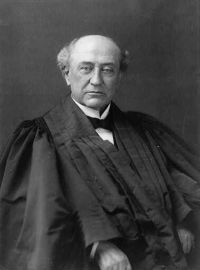
Portrait of David Josiah Brewer David Josiah Brewer Merchants' Manufacturers' National Bank of Pittsburg v…

To every bank, state and national, and all alike, is given the privilege of discharging all tax obligations by collecting from its stockholders and paying eight mills on the dollar upon the par value of the stock. If a bank has a large surplus, and its stock is in consequence worth five or six times its par value, naturally it elects to collect and pay the eight mills, and thus in fact it pays at a less rate on the actual value of its property than the bank without surplus, and whose stock is only worth par.
Source: Wikisource

Portrait of David Josiah Brewer David Josiah Brewer Merchants' Manufacturers' National Bank of Pittsburg v…

If it be said that a lack of uniformity renders the statute obnoxious to that part of the fourteenth amendment to the federal constitution which forbids a state to 'deny to any person within its jurisdiction the equal protection of the laws,' it becomes important to see in what consists the lack of uniformity. It is not in the terms or conditions expressed in the statute, but only in the possible results of its operation. Upon all bank shares, whether state or national, rests the ordinary state tax of four mills.
Source: Wikisource

Portrait of David Josiah Brewer David Josiah Brewer Merchants' Manufacturers' National Bank of Pittsburg v…

The legislation before us treats state banks and national banks alike; gives to each the same privileges; and there is no discrimination against national banks as such.
It is further insisted that the act is really one taxing the bank, and not taxing the shares of stock as the property of the stockholders, but this is obviously a misinterpretation of the statute. That simply makes the bank the agent to collect from the stockholders the tax imposed upon the shares.
Source: Wikisource

Get perspective with Kwize: daily news enlightened by great literature