Dorothy L. Sayers

Dorothy L. Sayers

Summary

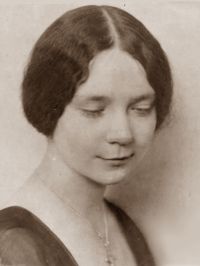
Portrait of Dorothy L. Sayers Dorothy L. Sayers Whose Body? — Chapter XIII (1923)

To carry a dead man down a suburban street in the middle of the night seemed outside the range of practical politics. On the roof, on the other hand, the rain, which would have betrayed me on the ground, would stand my friend.
To reach the roof, it was necessary to carry my burden to the top of the house, past my servants' room, and hoist him out through the trapdoor in the box-room roof. Had it merely been a question of going quietly up there myself, I should have had no fear of waking the servants, but to do so burdened by a heavy body was more difficult.
Source: Wikisource

Portrait of Dorothy L. Sayers Dorothy L. Sayers Whose Body? — Chapter XIII (1923)

To my delight, on this particular occasion, the cistern was in excellent form, honking, whistling and booming like a railway terminus. I gave the noise five minutes' start, and when I calculated that the sleepers would have finished cursing me and put their heads under the clothes to shut out the din, I reduced the flow of water to a small stream and left the bathroom, taking good care to leave the light burning and lock the door after me. Then I picked up my pauper and carried him upstairs as lightly as possible.
Source: Wikisource

Portrait of Dorothy L. Sayers Dorothy L. Sayers Whose Body? — Chapter XIII (1923)

As I wished to convey the impression that Levy had gone to bed in the usual way, I simply went to bed. The surest and simplest method of making a thing appear to have been done is to do it. A bed that has been rumpled about with one's hands, for instance, never looks like a bed that has been slept in. I dared not use Levy's brush, of course, as my hair is not of his colour, but I did everything else. I supposed that a thoughtful old man like Levy would put his boots handy for his valet, and I ought to have deduced that he would fold up his clothes.
Source: Wikisource

Get perspective with Kwize: daily news enlightened by great literature