Dorothy L. Sayers

Dorothy L. Sayers

Summary

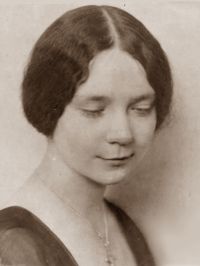
Portrait of Dorothy L. Sayers Dorothy L. Sayers Whose Body? — Chapter X (1923)

It's premature senile decay, often observed in the families of hereditary legislators. Go away, Wimsey, and play us the 'Beggar's Opera,' or something."
"That's good enough, isn't it?" said Lord Peter, when the happy Mr. Piggott had been despatched home after a really delightful evening.
"I'm afraid so," said Parker. "But it seems almost incredible."
"There's nothing incredible in human nature," said Lord Peter; "at least, in educated human nature. Have you got that exhumation order?"
"I shall have it tomorrow. I thought of fixing up with the workhouse people for tomorrow afternoon.
Source: Wikisource

Portrait of Dorothy L. Sayers Dorothy L. Sayers Whose Body? — Chapter X (1923)

Freke is a surgeon; he was a methodical and daring man: surgeons are obliged to be both daring and methodical. Now take the other side. The man who got hold of the Battersea corpse had to have access to dead bodies. Freke obviously had access to dead bodies. He had to be cool and quick and callous about handling a dead body. Surgeons are all that. He had to be a strong man to carry the body across the roofs and dump it in at Thipps's window. Freke is a powerful man and a member of the Alpine Club.
Source: Wikisource

Portrait of Dorothy L. Sayers Dorothy L. Sayers Whose Body? — Chapter X (1923)

Well, go back to Tommy Pringle."
Tommy Pringle's joke was repeated, not without some embarrassment.
"Quite so. Was that all?"
"No. The chap who was working with Tommy said that sort of thing came from over-feeding."
"I deduce that Tommy Pringle's partner was interested in the alimentary canal."
"Yes; and Tommy said, if he'd thought they'd feed you like that he'd go to the workhouse himself."
"Then the man was a pauper from the workhouse."
"Well, he must have been, I suppose."
"Are workhouse paupers usually fat and well-fed?"
Source: Wikisource

Get perspective with Kwize: daily news enlightened by great literature