Summary

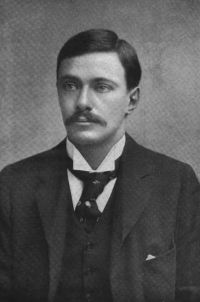
Portrait of E. F. Benson E. F. Benson The Room in the Tower and Other Stories… (1912)

Of the manner of its passing we know next to nothing, any more than we know the manner of the actual process by which fear accelerates the beating of the heart, but as surely as a Marconi message leaps along the air by no visible or tangible bridge, so through some subtle gateway of the body these forces can march from the citadel of the spirit into material forms, whether that material is a living part of ourselves or that which we choose to call inanimate nature.
Source: Wikisource

Portrait of E. F. Benson E. F. Benson The Room in the Tower and Other Stories… (1912)

A murder has been committed, let us say, and the room where it took place is haunted. The figure of the murdered, or less commonly of the murderer, is seen there by sensitives, and cries are heard, or steps run to and fro. The atmosphere has somehow been charged with the scene, and the scene in whole or part repeats itself, though under what laws we do not know, just as a phonograph will repeat, when properly handled, what has been said into it."
"This is all theory," I remarked.
"But it appears to me to cover a curious set of facts, which is all we ask of a theory.
Source: Wikisource

Portrait of E. F. Benson E. F. Benson The Room in the Tower and Other Stories… (1912)

That such interweaving existed has, of course, been known for centuries; doctors, for instance, knew that a cheerful optimistic spirit on the part of their patients conduced towards recovery; that fear, the mere emotion, had a definite effect on the beat of the heart, that anger produced chemical changes in the blood, that anxiety led to indigestion, that under the influence of strong passion a man can do things which in his normal state he is physically incapable of performing.
Source: Wikisource

Get perspective with Kwize: daily news enlightened by great literature