Summary

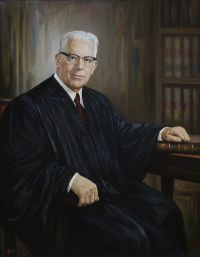
Portrait of Earl Warren Earl Warren Garner v. Louisiana — Opinion of the Court

The Supreme Court of Louisiana set aside convictions for breach of the peace, holding that the defendants did not commit any unlawful act or pursue any disorderly course of conduct which would tend to disturb the peace, thus, in effect, that peaceful conduct, even though conceivably offensive to another class of the public, is not conduct which may be proscribed by Louisiana's disturbance of the peace statute without evidence that the actor conducted himself in some outwardly unruly manner.
Source: Wikisource

Portrait of Earl Warren Earl Warren Garner v. Louisiana — Opinion of the Court

Thus, having shown that these records contain no evidence to support a finding that petitioners disturbed the peace, either by outwardly boisterous conduct or by passive conduct likely to cause a public disturbance, we hold that these convictions violated petitioners' rights to due process of law guaranteed them by the Fourteenth Amendment to the United States Constitution.
Source: Wikisource

Portrait of Earl Warren Earl Warren Garner v. Louisiana — Opinion of the Court

The conclusion of the highest Louisiana court that the breach of the peace statute does not reach peaceful and orderly conduct is substantiated by the conclusion drawn from reading the statute as a whole. The catch-all provision under which the petitioners were tried and convicted follows an enumeration of six specific offenses, each of which describes overtly tumultuous or disruptive behavior. It would therefore normally be interpreted in the light of the preceding sections as an effort to cover other forms of violence or loud and boisterous conduct not already listed.
Source: Wikisource

Get perspective with Kwize: daily news enlightened by great literature