Summary

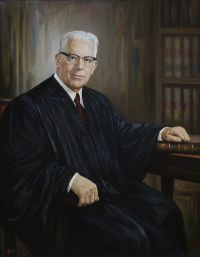
Portrait of Earl Warren Earl Warren Jenkins v. Delaware — Opinion of the Court

The type of apparent incongruity petitioner urges us to avoid is equally present in refusing to apply Miranda to defendants whose cases, like petitioner's, were not final on the date Miranda was decided, yet making an exception for petitioner simply because he was afforded a post-Miranda retrial for reasons wholly unrelated to the admissibility of his incriminating statement.
Source: Wikisource

Portrait of Earl Warren Earl Warren Jenkins v. Delaware — Opinion of the Court

Petitioner argues that this 'studied' focus on the trial process indicates that we intended Miranda to be applied to retrials, which, he insists, begin that process anew. As Delaware correctly points out, however, more than once we stated our holding in Johnson in terms of 'cases' commenced before the date of Miranda. See 384 U.S., at 733, 86 S.Ct. 1781. Delaware and the authorities it relies upon [5] argue that, since the word 'case' usually incorporates all the judicial proceedings against an accused, a retrial is not the 'commencement' of a case.
Source: Wikisource

Portrait of Earl Warren Earl Warren Jenkins v. Delaware — Opinion of the Court

The burden would be particularly onerous where an investigation was closed years prior to a retrial because law enforcement officials relied in good faith upon a strongly incriminating statement, admissible at the first trial, to provide the cornerstone of the prosecution's case. [8] Moreover, we cannot assume that applying Miranda to retrials would affect only a small number of cases.
Source: Wikisource

Get perspective with Kwize: daily news enlightened by great literature