Summary

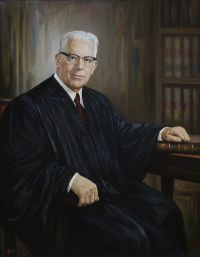
Portrait of Earl Warren Earl Warren National Labor Relations Board v…

First, if it can reasonably be concluded that the employer's discriminatory conduct was 'inherently destructive' of important employee rights, no proof of an antiunion motivation is needed and the Board can find an unfair labor practice even if the employer introduces evidence that the conduct was motivated by business considerations.
Source: Wikisource

Portrait of Earl Warren Earl Warren National Labor Relations Board v…

Second, if the adverse effect of the discriminatory conduct on employee rights is 'comparatively slight,' an antiunion motivation must be proved to sustain the charge if the employer has come forward with evidence of legitimate and substantial business justifications for the conduct. Thus, in either situation, once it has been proved that the employer engaged in discriminatory conduct which could have adversely affected employee rights to some extent, the burden is upon the employer to establish that he was motivated by legitimate objectives since proof of motivation is most accessible to him.
Source: Wikisource

Portrait of Earl Warren Earl Warren National Labor Relations Board v…

Shortly thereafter, however, the company announced that it would grant vacation pay-in the amounts and subject to the conditions set out in the expired agreement-to all employees who had reported for work on July 1, 1963. The company denied that these payments were founded on the agreement and stated that they merely reflected a new 'policy' which had been unilaterally adopted.
The refusal to pay vacation benefits to strikers, coupled with the payments to nonstrikers, formed the bases of an unfair labor practice complaint filed with the Board while the strike was still in progess.
Source: Wikisource

Get perspective with Kwize: daily news enlightened by great literature