Summary

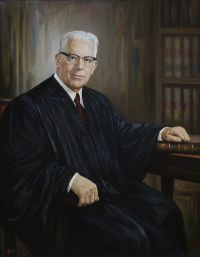
Portrait of Earl Warren Earl Warren Street v. New York — Dissent

Both those who seek constitutional shelter for acts of flag desecration perpetrated in the course of a political protest and those who must enforce the law are entitled to know the scope of constitutional protection. The Court's explicit reservation of the constitutionality of flag-burning prohibitions encourages others to test in the streets the power of our States and National Government to impose criminal sanctions upon those who would desecrate the flag.
Source: Wikisource

Portrait of Earl Warren Earl Warren Street v. New York — Dissent

The Federal law provides you may burn an American flag; therefore, New York State is without power to make a complaint and convict a man for the burning of an American flag.
'Court: Motions denied. The question here would be whether he burned it because it was in such poor condition that it should be burned, or if it was an illegal demonstration.' (Emphasis added.)
Defense counsel insisted that burning the flag, an act he equated with a demonstration or picketing, was a form of speech for which his client could not be constitutionally punished.
Source: Wikisource

Portrait of Earl Warren Earl Warren Street v. New York — Dissent

The Court first determined that a criminal conviction for display of a red flag as a symbol of opposition to organized government would impinge upon First Amendment freedoms. Since the jury charge was disjunctive, i.e., Miss Stromberg could be convicted if the jury found that she conducted the ceremony for any of the three statutorily prohibited goals, it was possible that her conviction rested totally upon an act entitled to constitutional protection.
Source: Wikisource

Get perspective with Kwize: daily news enlightened by great literature