Summary

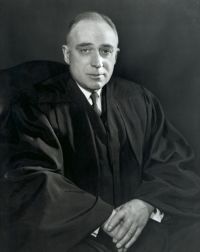
Portrait of John Marshall Harlan II John Marshall Harlan II Street v. New York — Opinion of the Court

Nor do we perceive any basis for our Brother WHITE's fears that our decision today may be taken to require reversal whenever a defendant is convicted for burning a flag in protest, following a trial at which his words have been introduced to prove some element of that offense. Assuming that such a conviction would otherwise pass constitutional muster, a matter about which we express no view, nothing in this opinion would render the conviction impermissible merely because an element of the crime was proved by the defendant's words rather than in some other way.
Source: Wikisource

Portrait of John Marshall Harlan II John Marshall Harlan II Street v. New York — Opinion of the Court

Though our conclusion is a narrow one, it requires pursuit of four lines of inquiry: (1) whether the constitutionality of the 'words' part of the statute was passed upon by the New York Court of Appeals; (2) whether, if appellant's conviction may have rested in whole or in part on his utterances and if the statute as thus applied is unconstitutional, these factors in themselves require reversal; (3) whether Street's words may in fact have counted independently in his conviction; and (4) whether the 'words' provision of the statute, as presented by this case, is unconstitutional.
Source: Wikisource

Portrait of John Marshall Harlan II John Marshall Harlan II Street v. New York — Opinion of the Court

We take the rationale of Thomas to be that when a single-count indictment or information charges the commission of a crime by virtue of the defendant's having done both a constitutionally protected act and one which may be unprotected, and a guilty verdict ensues without elucidation, there is an unacceptable danger that the trier of fact will have regarded the two acts as 'intertwined' and have rested the conviction on both together.
Source: Wikisource

Get perspective with Kwize: daily news enlightened by great literature