Summary

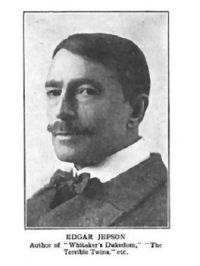
Portrait of Edgar Jepson Edgar Jepson Lady Noggs, Peeress — 7. The Lady Noggs Returns (1905)

He sank down in a chair and cried, "Felicia has been behaving shockingly—abominably!"
"Not a bit of it," said Mr. Borrodaile quietly.
"How—what? But she has," said the Prime Minister. "She has not only been mischievous, but positively impudent. She threw the Princess Wilhelmina into a pond; she splashed her with ink; and she pulled her hair in the most painful fashion. Besides, she was most insolent, not only to the Baroness Pulvermacher, but to the prince and princess themselves."
"The Baroness Pulvermacher appears to have unburdened her soul," said Mr. Borrodaile.
Source: Wikisource

Portrait of Edgar Jepson Edgar Jepson Lady Noggs, Peeress — 7. The Lady Noggs Returns (1905)

The Lady Noggs looked at the baroness with utter contempt, and murmured under her breath: "Sneak!"
"You were rude?" said Mr. Borrodaile.
"I only said I was glad to come away, because they were dishonourable people, and eat like pigs. And they are—they read a letter of mine to you, uncle; and then she tore it up. And they do eat like pigs," said the Lady Noggs firmly.
"Dear, dear! This is very tiresome!" said the Prime Minister. "How many times am I to tell you, Felicia, not to call your elders—But there, it is useless talking to you.
Source: Wikisource

Portrait of Edgar Jepson Edgar Jepson Lady Noggs, Peeress — 7. The Lady Noggs Returns (1905)

A marriage with a penniless girl like herself meant the ruin of a career which promised to be so brilliant.
She had been under the impression that she regarded him merely as the pleasantest and most entertaining of her friends. The thrill came as a most unpleasant warning that her deeper feelings might be very much more concerned in the matter than she supposed. At once she resolved not to return to Stonorill for at least a fortnight; and she began also to consider the resignation of her post of governess to the Lady Noggs.
Source: Wikisource

Get perspective with Kwize: daily news enlightened by great literature