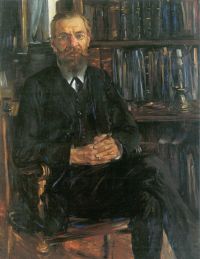
 Eduard Meyer,
1911 Encyclopædia Britannica, Volume 26…
(1911)
Eduard Meyer,
1911 Encyclopædia Britannica, Volume 26…
(1911)
“ Tigranes now had become “king of kings” and the mightiest monarch of Asia. So he built a new royal city, Tigranocerta, on the borders of Armenia and Mesopotamia, between Mt Masius and the Tigris, where he accumulated all his wealth and to which he transplanted the inhabitants of twelve Greek towns of Cappadocia, Cilicia and Syria (Plut. Luc. 21, 26; Appian, Mithr. 67; Strabo xi. 522, 532, 539; Plin. vi. 26 seq.; for the situation, which is much disputed, cf. Tac. Ann. xiv. 24, xv. 5, ed. Furneaux) . He also transplanted many Arabic tribes into Mesopotamia (Plut. Luc. 21; Plin. vi. 142) . ”
