Summary

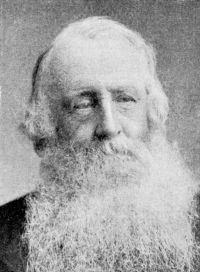
Portrait of Edward A. Freeman Edward A. Freeman The Reign of William Rufus and the Accession of Henry the First… (1882)

As it is, the career of William the Red is one of which the kindest words that we can say are that he always kept his word when it was plighted in a certain form, and that he was less cruel in his own person than many men of his time, than some better men than himself. Judgement on the reign of Rufus. But, however we judge of the man, there is but one judgement to be passed on the reign. The arrow, by whomsoever shot, set England free from oppression such as she never felt before or after at the hand of a single man.
Source: Gutenberg

Portrait of Edward A. Freeman Edward A. Freeman The Reign of William Rufus and the Accession of Henry the First… (1882)

If from one side the hall of Westminster has been one of the cradles of English freedom, from another side it has been the special home of that form of unlaw by which men have been sent to a wrongful doom under the outward forms of justice. Of all that is good and bad in the history of the law of England the hall of Rufus is the material embodying. Within no other building reared by the hand of man has so great a share of English history been wrought.
Source: Gutenberg

Portrait of Edward A. Freeman Edward A. Freeman The Reign of William Rufus and the Accession of Henry the First… (1882)

Among all the wonders of Saint Julian’s minster—​beside the nave which is inseparably bound up with so many living pages of our story—​beside the choir which in itself concerns not the historian of Norman kings and Cenomannian counts, but on which we gaze in breathless wonder as one of the noblest of the works of man—​no spot comes more truly home to us than that where we see the small remnants of what once was there and is there no longer. Alongside of the soaring apse to the east, of the wide portal to the west, the northern tower of Howel is indeed conspicuous by its absence.
Source: Gutenberg

Get perspective with Kwize: daily news enlightened by great literature