Summary

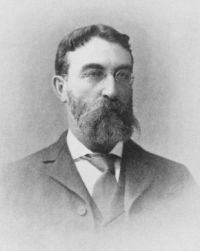
Portrait of George Burton Adams George Burton Adams The History of England from the Norman Conquest to the Death of John…

Of all the middle ages there is perhaps no period that saw the ideal which chivalry had created of the wholly "courteous" king and prince more nearly realized in practice than the last half of the twelfth century—the brave warrior and great ruler, of course, but always also the generous giver, who considered "largesse" one of the chiefest of virtues and first of duties, and bestowed with lavish hand on all comers money and food, robes and jewels, horses and arms, and even castles and fiefs, recognizing the natural right of each one to the gift his rank would seem to claim.
Source: Gutenberg

Portrait of George Burton Adams George Burton Adams The History of England from the Norman Conquest to the Death of John…

But the ordinary doings of a tyrant were not the worst things about William Rufus. Effeminate fashions, vices horrible and unheard-of in England, flourished at his court and threatened to corrupt the nation. The fearful profanity of the king, his open and blasphemous defiance of God, made men tremble, and those who were nearest to him testified "that he every morning got up a worse man than he lay down, and every evening lay down a worse man than he got up."
Source: Gutenberg

Portrait of George Burton Adams George Burton Adams The History of England from the Norman Conquest to the Death of John…

He found at the head of the list of those who had abandoned his allegiance the name of John. Then his will forsook him and his heart broke. He turned his face to the wall and cried: "Let everything go as it will; I care no more for myself or for the world." On July 6 he died at Chinon, murmuring almost to the last, "Shame on a conquered king," and abandoned by all his family except his eldest son Geoffrey, the son, it was said, of a woman, low in character as in birth.
Source: Gutenberg

Get perspective with Kwize: daily news enlightened by great literature