Summary

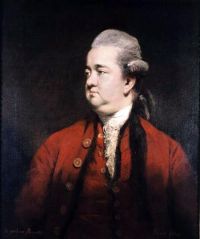
Portrait of Edward Gibbon Edward Gibbon History of the Decline and Fall of the Roman Empire…

Homer is dumb, or I am deaf; nor is it in my power to enjoy the beauty which I possess. I have seated him by the side of Plato, the prince of poets near the prince of philosophers; and I glory in the sight of my illustrious guests. Of their immortal writings, whatever had been translated into the Latin idiom, I had already acquired; but, if there be no profit, there is some pleasure, in beholding these venerable Greeks in their proper and national habit. I am delighted with the aspect of Homer; and as often as I embrace the silent volume, I exclaim with a sigh, Illustrious bard!
Source: Gutenberg

Portrait of Edward Gibbon Edward Gibbon History of the Decline and Fall of the Roman Empire…

The pope and the emperor may shine as lofty titles, as splendid images; but they are unable to command, and none are willing to obey: every state has a separate prince, and every prince has a separate interest. What eloquence could unite so many discordant and hostile powers under the same standard? Could they be assembled in arms, who would dare to assume the office of general? What order could be maintained?—what military discipline? Who would undertake to feed such an enormous multitude?
Source: Gutenberg

Portrait of Edward Gibbon Edward Gibbon History of the Decline and Fall of the Roman Empire…

From the lines, the galleys, and the bridge, the Ottoman artillery thundered on all sides; and the camp and city, the Greeks and the Turks, were involved in a cloud of smoke which could only be dispelled by the final deliverance or destruction of the Roman empire. The single combats of the heroes of history or fable amuse our fancy and engage our affections: the skilful evolutions of war may inform the mind, and improve a necessary, though pernicious, science. But in the uniform and odious pictures of a general assault, all is blood, and horror, and confusion
Source: Gutenberg

Get perspective with Kwize: daily news enlightened by great literature