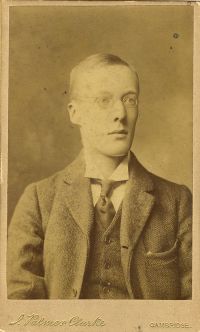
Edward Joseph Dent

Edward Joseph Dent

Summary

Portrait of Edward Joseph Dent Edward Joseph Dent 1911 Encyclopædia Britannica (1911)

Leo and Scarlatti at their best have a solidity and dignity entirely wanting in Durante, and Alessandro Scarlatti at his worst is frivolous rather than sentimental. This type of music is characteristic of Durante as a man; intellectually uncultured, but sincerely devout. As a teacher he insisted on the strict observance of rules for which he either would not or could not give a reason, differing thus from Alessandro Scarlatti, whose first care was to develop his pupils’ talents according to their own individualities, regarding all rules as subservient to his exquisite sense of musical beauty.
Source: Wikisource

Portrait of Edward Joseph Dent Edward Joseph Dent 1911 Encyclopædia Britannica (1911)

That his great qualities have been little recognized is due partly to the wonderful mastery with which he avoided all appearance of difficulty, and partly to the fact that he carried out in his operas and cantatas the structural methods which the present age considers to be suitable to instruments alone, but which were indeed admirably suited to vocal music in an age when the singer was technically and intellectually far in advance of all other musicians.
Source: Wikisource

Portrait of Edward Joseph Dent Edward Joseph Dent 1911 Encyclopædia Britannica (1911)

The complete failure of L'Olimpiade at Rome in January 1735 is said to have broken his health, and determined him to abandon the theatre for the Church, this statement is, however, incompatible with the fact that his comic opera Il Flaminio was produced in Naples in September of the same year with undoubted success. His ill health was more probably due to his notorious profligacy. In 1736 he was sent by the duke of Maddaloni to the Capuchin monastery at Pozzuoli, the air of the place being considered beneficial to cases of consumption.
Source: Wikisource

Get perspective with Kwize: daily news enlightened by great literature