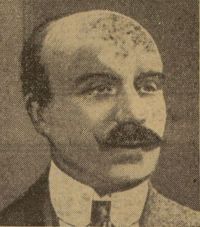
Domenico Scarlatti

Definition and stakes

Franz Gehring A Dictionary of Music and Musicians (1900)

SCARLATTI, Domenico, or, according to [1] Quadrio, Girolamo, son of Alessandro, born apparently in Naples, 1683, first learned from his father, and later from Gasparini. He has been called a pupil of Bernardo Pasquini, but that seems most improbable, seeing that Pasquini was of the school of Palestrina, and wrote entirely in the contrapuntal style, whereas Domenico Scarlatti's chief interest is that he was the first composer who studied the peculiar characteristics of the free style of the harpsichord.
Source: Wikisource

Various The Art of Music - Vol. 7 (of 14… (1915)

It will be noticed that each of these great men speaks of a different race. We may consider Scarlatti first as spokesman in harpsichord music of the Italians, who at that time had made their mark so deep upon music that even now it has not been effaced, nor is likely to be. His father, Alessandro, was the most famous and the most gifted musician in Europe. From Naples he set the standard for the opera of the world, and in Naples his son Domenico was born on October 26, 1685, a few months only after the birth of Sebastian Bach in Eisenach.
Source: Gutenberg

Portrait of George P. Upton George P. Upton The Standard Cantatas: Their Stories…

Contemporary with Scarlatti was Francesco Gasparini, a Roman composer and harpsichord player of such eminence that Scarlatti sent his son Domenico, who afterwards became famous by his musical [19] achievements, to study with him. Gasparini wrote twelve cantatas,—not so scholarly but quite as popular as those by Scarlatti. As a return for the compliment which Scarlatti had paid him, Gasparini sent him a cantata, which was the signal for a lively cantata-correspondence between them, each trying to outdo the other.
Source: Gutenberg

Get perspective with Kwize: daily news enlightened by great literature