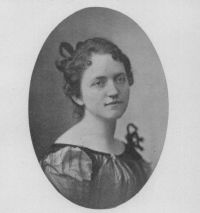
Adela Harriet Sophia Wodehouse

Biographical details

Adela Harriet Sophia Wodehouse A Dictionary of Music and Musicians (1900)

Excepting Beethoven, none have illustrated the power of rhythm so well as Schumann. He often imparts a strange and entirely novel significance to commonplace or familiar phrases by syncopated notes, by putting the emphasis on the weak part of the bar, or by accents so marked as to give the impression of a simultaneous combination of triple and common time.
Source: Wikisource

Adela Harriet Sophia Wodehouse A Dictionary of Music and Musicians (1900)

With respect to music, Berlioz is the typical name of the renaissance of 1830; but Liszt, on whom the French school exercised so strong an influence, may be associated with him. So far were these composers and their countless followers borne by the revolutionary impulse, that they did not shrink at times from a total rejection of the old traditional forms in their instrumental music; but it cannot be said that very valuable results were obtained by their hardihood. They chose indeed romantic subjects for musical representation, as Weber and Schumann had done, but there the resemblance ceased.
Source: Wikisource

Adela Harriet Sophia Wodehouse A Dictionary of Music and Musicians (1900)

To sum up, in conclusion, our obligations to the romantic school, we must acknowledge that they saved music from the danger with which it was at one time threatened of being treated as an exact but dry and cold science; that they gave it a freer and more elastic form; that they developed the capabilities and technique of various instruments; that being themselves always filled with a deep reverence for their own art they rescued from unmerited neglect some of the finest works of earlier composers
Source: Wikisource

Get perspective with Kwize: daily news enlightened by great literature