Summary

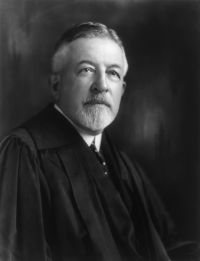
Portrait of Edward Terry Sanford Edward Terry Sanford McDonald v. Maxwell — Opinion of the Court

It is apparent, in the light of these decisions, that the stock dividends received by the executors represented no real increase in the principal of the estate during the accounting period. They merely changed the form of the estate's investment in the corporate stocks by increasing the number of its shares, but left the aggregate value of all its shares the same as that before the dividend shares were issued.
Source: Wikisource

Portrait of Edward Terry Sanford Edward Terry Sanford McDonald v. Maxwell — Opinion of the Court

The whole number of shares before the stock dividend represented the whole property of the corporation, and after the dividend they represent that and no more. A stock dividend does not distribute property, but simply dilutes the shares as they existed before.'
So in Eisner v. Macomber, 252 U.S. 189, 211, 40 S.C.t. 189, 194 (64 L. Ed. 521, 9 A. L. R. 1570) in which it was held that stock dividends were not taxable as income, the court said:
'The essential and controlling fact is that the stockholder has received nothing out of the company's assets for his separate use and benefit
Source: Wikisource

Get perspective with Kwize: daily news enlightened by great literature