Summary

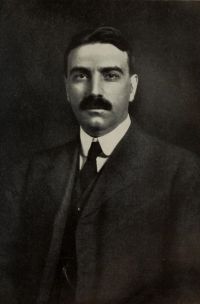
Portrait of Edwin Francis Gay Edwin Francis Gay 1911 Encyclopædia Britannica, Volume 12… (1911)

The assertion of Hanseatic influence in the two decades, 1356 to 1377, marks the zenith of the League’s power and the completion of the long process of unification. Under the pressure of commercial and political necessity, authority was definitely transferred from the Hansas of merchants abroad to the Hansa of towns at home, and the sense of unity had become such that in 1380 a Lübeck official could declare that “whatever touches one town touches all.”
Source: Wikisource

Portrait of Edwin Francis Gay Edwin Francis Gay 1911 Encyclopædia Britannica, Volume 12… (1911)

Among the factors, economic, geographic, political and social, which combined to bring about the decline of the Hanseatic League, none was probably more influential than the absence of a German political power comparable in unity and energy with those of France and England, which could quell particularism at home, and abroad maintain in its vigour the trade which these towns had developed and defended with their imperfect union.
Source: Wikisource

Portrait of Edwin Francis Gay Edwin Francis Gay 1911 Encyclopædia Britannica, Volume 12… (1911)

The German Order in 1398 converted the Hanseatic poundage to a territorial tax for its own purposes, and one of the chief causes for Cologne’s disaffection a half-century later was the extension from Flanders to other parts of the Netherlands of the levy made by the counter at Bruges. Since the authority of the League rested primarily on the moral support of its members, allied in common trade interests and acquiescing in the able leadership of Lübeck, its only means of compulsion was the “Verhansung,” or exclusion of a recalcitrant town from the benefits of the trade privileges of the League.
Source: Wikisource

Get perspective with Kwize: daily news enlightened by great literature