Summary

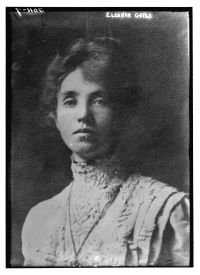
Portrait of Eleanor Gates Eleanor Gates The Rich Little Poor Boy

JOHNNIE went through his regular duties in the flat, but he went through them in a daze. Whenever his work was done, he sat down. Then, his body quiet, his brain registered sounds—a far-off voice, the slam of a door, the creak of the stairs, whistles, bells. But his thoughts fixed themselves upon nothing. Aimlessly they moved from one idea to another, yet got nowhere, like chips on currentless water. If he remembered about Father Pat, that memory was dull—so dull that he could not recall the Father's face; and he did not even dream about him at night. He endured no suffering.
Source: Gutenberg

Portrait of Eleanor Gates Eleanor Gates The Rich Little Poor Boy

Slowly and steadily it went up and down whenever Barber ate or talked—as even Johnnie's small, straight nose would often do. But whenever Big Tom laughed—sneeringly or boastfully or in ugly triumph—the nose would make a sudden, sidewise twist.
But something besides its power to move made it seem a live and separate thing: the longshoreman troubled himself to shave only of a Sunday morning, when, with all the stiff, dark growth cleared away to right and left—for Barber's beard grew almost to his eyes—his nose, though bent and purplish, was fairly like a nose.
Source: Gutenberg

Portrait of Eleanor Gates Eleanor Gates The Rich Little Poor Boy

Johnnie fell back. And into his own face, twisted and wet with grief, there came an expression of a terrible wonder—the wonder that Big Tom, or any one, could be so cruel, so heartless, so contemptible. And there flashed into his mind something he had once heard Father Pat say: "There's not so many grown-up people in the world; there's plenty of grown-up bodies, but the minds at the top o' them, they're children's minds!" And, oh, how true it was! For Barber was like that—had a mind younger than Johnnie's own—the boy knew it then.
Source: Gutenberg

Get perspective with Kwize: daily news enlightened by great literature