Summary

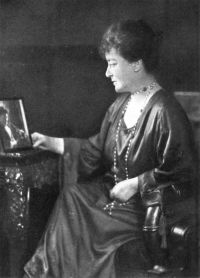
Portrait of Eliza Davis Aria Eliza Davis Aria Costume: Fanciful, Historical, and Theatrical… (1906)

No gentleman would dream of either paying or receiving a visit without shoes on his feet, a fan in his hand, and a wide, pointed hat, rather suggestive of a tent, on his head. How true it is that manners, like morals, are mere matters of geography!
In contrast to the love of display characteristic of their Chinese neighbours, the Japanese are conspicuous for extreme simplicity. This national trait finds expression in their dress. Here I pause to consider whether, as a chronicler of costume, I should allude to the Japanese in the present or past tense?
Source: Wikisource

Portrait of Eliza Davis Aria Eliza Davis Aria Costume: Fanciful, Historical, and Theatrical… (1906)

The only difference between the dress of women of the upper and lower classes was the employment of cotton instead of silk.
Despite the fact that European influence has done much towards imposing European costume upon the Japanese, the influence is as yet restricted to Tokio and other industrial centres. In rural districts the national dress is still sacred, and the country-man remains a quaintly picturesque figure to delight the visitor from across seas, who recognises in him the prototype of the carved ivory models of the glass cabinet and curio table.
Source: Wikisource

Get perspective with Kwize: daily news enlightened by great literature