Summary

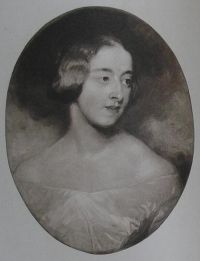
Portrait of Elizabeth Rundle Charles Elizabeth Rundle Charles The black ship: with other allegories and parables

Once I quivered in the forest at the touch of every breeze. Every living leaf of mine had melody, and all together made a stream of many-voiced music; whilst around me were countless living trees like myself, who woke at every dawn to a chorus in the morning breeze. But since the axe was laid at our roots, all the music has gone from our branches. We are useful still, they say, in the gallant ship, and our country mentions us with honour even in death; but the music has gone from us with life for ever, and we can only groan and creak in the storms. LIFE made us musical," said the Oak-beam.
Source: Gutenberg

Portrait of Elizabeth Rundle Charles Elizabeth Rundle Charles The black ship: with other allegories and parables

Whenever any one desires to enlist in our Prince's service, he must repair alone, before daybreak, to a lonely beach on our shores, and wait there for what the King will send. There, when the sun rises, not always the first morning, or the second, or the third, but always at last, his first rays gleam on a new jewel, exactly like the others, sparkling among the shells and pebbles. The young soldier takes it up, presses it to his lips, murmurs the name written on it, binds it on his heart, and it is his own, and he is the King's for ever.
Source: Gutenberg

Portrait of Elizabeth Rundle Charles Elizabeth Rundle Charles The black ship: with other allegories and parables

That would be worth living for!—To fill the air with delicate fragrance, to be sung to by the birds, to be gathered by human hands as a treasure; or even to live unnoticed by any one, but only to be a flower!—A beautiful, fragrant creature, with a coat of many colours, and a crown of golden stamens, and with promise in its heart;—that would be worth living for! But to be a leaf-bud, a brown, dark, hard leaf-bud!—It would be better to die at once.
Source: Gutenberg

Get perspective with Kwize: daily news enlightened by great literature