Summary

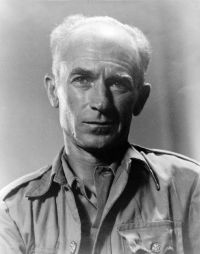
Portrait of Ernie Pyle Ernie Pyle Gatlinburg and the Great Smokies

He takes off his shoes and sprawls out with a feeling of honestly earned repose. The thin air and the great height and the unbridgeable gap in character between us and all those soft souls down below gives you a puffy pride, and you expand and expound at great length. We all did that.
The afternoon wore on into early mountain darkness, and after supper we felt like purring. Then Jack Huff came with more great logs. And we sat warm before the fireplace and under the hanging gasoline lantern and we all waxed, you might say, a little philosophic.
Source: Gutenberg

Portrait of Ernie Pyle Ernie Pyle Gatlinburg and the Great Smokies

If the new arrival is a heel, Jack Huff is polite but his conversation becomes a minimum.
Few vacationers can out-think this product of the Smokies. He listens nightly to the radio news; he absorbs scores of passionate orations on world affairs from his guests before the big fireplace; he reads the papers and magazines.
He is a man of many abilities, too. He builds his own cabins, he has a flair for architecture; construction is his hobby. And he weaves. On the big loom in the dining room he has woven all the lovely curtains for the lodge windows.
Source: Gutenberg

Portrait of Ernie Pyle Ernie Pyle Gatlinburg and the Great Smokies

When I go to see a National Park, I like to walk in it.
I don’t want to mope along with a tourist party behind a naturalist, and I don’t want to ride no damned horse. I just want to get out all by myself like a hermit and square off my shoulders and head uphill.
There is plenty of walking for a fellow like me in the Great Smokies. In fact there are 675 miles of trails that meander all over this vast park.
But the main trails patronized by tourists are the five different routes which lead up to the top of Mt. Le Conte, nearly 6600 feet high. Many people make it up and back in one day.
Source: Gutenberg

Get perspective with Kwize: daily news enlightened by great literature