Summary

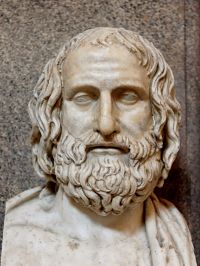
Portrait of Euripides Euripides The Tragedies of Euripides — Iphigeneia at Aulis (1898)

Agamemnon.
Sooth, voice there is none, nor slumberous cheep
Of bird, nor whisper of sea; and deep 10
Is the hush of the winds on Euripus that sleep.
Old Servant.
Yet without thy tent, Agamemnon my lord,
Why dost thou pace thus feverishly?
Over Aulis yonder is night's peace poured:
They are hushed which along the walls keep ward.
Come, pass we within.
Agamemnon.
I envy thee,
Ancient, and whoso unperilled may pace
Life's pathway unheeded and unrenowned:
But little I envy the high in place.
Old Servant.
Yet the life of these is glory-crowned. 20
Agamemnon.
Source: Wikisource

Portrait of Euripides Euripides The Tragedies of Euripides — Iphigeneia at Aulis (1898)

Richly their bits; and the midmost, the car-yoke who bore on their neck,
Dappled were they, with a hair here and there like a snow-smitten fleck.
They that in traces without round the perilous turning-post swept,
Bays were they, spotted their fetlocks: Peleides beside them on-leapt:
Sheathed in his harness, unflagging by car-rail and axle he kept. 230
(Str. 2)
And I came where the host of the war-ships lies,—
A marvel past telling,—
To fill with the vision my maiden eyes
And my heart joy-swelling.
Source: Wikisource

Portrait of Euripides Euripides The Tragedies of Euripides — Iphigeneia at Aulis (1898)

When the hosts of Hellas were mustered at Aulis beside the narrow sea, with purpose to sail against Troy, they were hindered from departing thence by the wrath of Artemis, who suffered no favouring wind to blow. Then, when they enquired concerning this, Kalchas the prophet proclaimed that the anger of the Goddess would not be appeased save by the sacrifice of Iphigeneia, eldest daughter of Agamemnon, captain of the host.
Source: Wikisource

Get perspective with Kwize: daily news enlightened by great literature