Summary

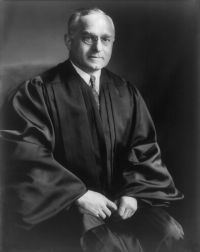
Portrait of Felix Frankfurter Felix Frankfurter Callanan v. United States — Opinion of the Court

He argues that Congress by combining the conspiracy and the substantive offense in one provision, § 1951, manifested an intent not to punish commission of two offenses cumulatively. Unlike the merger doctrine, petitioner's position does not question that the Government could charge a conspiracy even when the substantive crime that was its object had been completed. His concern is with the punitive consequences of the choice thus open to the Government; it can indict for both or either offense, but, petitioner contends, it can punish only for one.
Source: Wikisource

Portrait of Felix Frankfurter Felix Frankfurter Callanan v. United States — Opinion of the Court

No one ever suggested that cumulative penalties could be inflicted.
In sum, then, we have here a statute which, as a matter of English language, can fairly be read as imposing a single penalty for each interference or threatened interference with interstate commerce by any or all of the prohibited means. We have evidence stemming from the very origin of the legislation that the unit of prosecution under the statute was to be each restraint of commerce, not each means by which the restraint was accomplished.
Source: Wikisource

Portrait of Felix Frankfurter Felix Frankfurter Callanan v. United States — Opinion of the Court

It is also true that Congress has often chosen to exercise its power to make separate offenses of the two. [10] But neither of these generalities provides an answer to the question now before us. The question here is the meaning of this law, the Hobbs Anti-Racketeering Act. I do not agree that under this statute a man can be separately convicted and cumulatively punished for obstructing commerce by extorting money, and for conspiring to obstruct commerce by the same extortion.
Source: Wikisource

Get perspective with Kwize: daily news enlightened by great literature