Summary

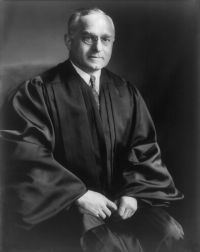
Portrait of Felix Frankfurter Felix Frankfurter Jennings v. Illinois — Dissent

What is the substantial federal question? Certainly whether a claim which could have been raised by the method of direct review of the trial proceedings but was not, must be allowed to be raised in some collateral attack, is not a substantial federal question. Such a requirement cannot be made of the States under the Fourteenth Amendment. It is not enforceable even as to federal prosecutions. Sunal v. Large, 332 U.S. 174, 67 S.Ct. 1588, 91 L.Ed. 1982.
Is then the federal claim the denial by Illinois of stenographic minutes of a trial to an indigent defendant?
Source: Wikisource

Portrait of Felix Frankfurter Felix Frankfurter Jennings v. Illinois — Dissent

My difficulty, however, is not merely with ambiguity or, perhaps, obscurity in defining the federal right which was, or may have been, denied by the Illinois proceedings here for review. The fatal weakness, as I see it, is that the question of a denial of one or more putative federal rights is nowhere properly raised on the record before us.
It is true that petitioners allege they were convicted on the basis of coerced confessions and perjured testimony admitted in evidence in violation of the Fourteenth Amendment.
Source: Wikisource

Portrait of Felix Frankfurter Felix Frankfurter Jennings v. Illinois — Dissent

Certainly if, for whatever reason, the Illinois courts fail to afford corrective relief for the denial of a right guaranteed by the United States Constitution, the road to the federal court is open. Mooney v. Holohan, 294 U.S. 103, 55 S.Ct. 340, 79 L.Ed. 791; Dowd v. United States ex rel. Cook, 340 U.S. 206, 71 S.Ct. 262, 95 L.Ed. 215. At the core of the problem remains the precise definition of the basis for invoking the Fourteenth Amendment.
Source: Wikisource

Get perspective with Kwize: daily news enlightened by great literature