Summary

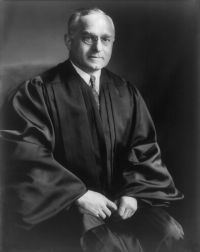
Portrait of Felix Frankfurter Felix Frankfurter Ludecke v. Watkins — Opinion of the Court

The fact that hearings are utilized by the Executive to secure an informed basis for the exercise of summary power does not argue the right of courts to retry such hearings, nor bespeak denial of due process to withhold such power from the courts.
Such great war powers may be abused, no doubt, but that is a bad reason for having judges supervise their exercise, whatever the legal formulas within which such supervision would nominally be confined.
Source: Wikisource

Portrait of Felix Frankfurter Felix Frankfurter Ludecke v. Watkins — Opinion of the Court

The same considerations of reason, authority, and history, that led us to reject reading the statutory language 'declared war' [16] to mean 'actual hostilities,' support the validity of the statute. The war power is the war power. If the war, as we have held, has not in fact ended, so as to justify local rent control, a fortiori, it validly supports the power given to the President by the Act of 1798 in relation to alien enemies.
Source: Wikisource

Portrait of Felix Frankfurter Felix Frankfurter Ludecke v. Watkins — Opinion of the Court

For one thing, removal was contingent not upon a finding that in fact an alien was 'dangerous.' The President was careful to call for the removal of aliens 'deemed by the Attorney General to be dangerous.' But the short answer is that the Attorney General was the President's voice and conscience. A war power of the President not subject to judicial review is not transmuted into a judicially reviewable action because the President chooses to have that power exercised within narrower limits than Congress authorized.
Source: Wikisource

Get perspective with Kwize: daily news enlightened by great literature