Summary

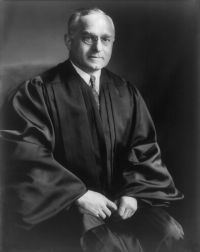
Portrait of Felix Frankfurter Felix Frankfurter United States v. Commodities Trading Corporation Commodities Trading Corporation…

To allow such wild imagination to enter into the practical determination of what is just compensation would merely sanction unbridled drafts on the Treasury. It would encourage every property owner to hold his goods off the market and to force the Government to requisition rather than purchase. That, by such retention, profits might be realized in the distant future is not an interest which the Constitution protects.
Source: Wikisource

Portrait of Felix Frankfurter Felix Frankfurter United States v. Commodities Trading Corporation Commodities Trading Corporation…

Want of a free market value does not require us to embrace automatically the ceiling price in disregard of other relevant circumstances bearing on justice in a particular case.
Costs, unlike 'retention value,' do not yield inherently speculative results. Including costs in computing just compensation does not give the condemnee a 'war profit' nor make inroads on the system of price controls. Such inclusion is a safeguard against discriminating hardships resulting from a formula which is generally fair but which by its nature cannot be fair to each individual.
Source: Wikisource

Portrait of Felix Frankfurter Felix Frankfurter United States v. Commodities Trading Corporation Commodities Trading Corporation…

The hardship may reach such magnitude in an individual instance as to make a taking by the public at a ceiling price unjust compensation. Of course war means burdens, and there is no calculus by which they can be fairly distributed. From any point of view the ultimate sacrifices are uncompensable. But these considerations are not relevant in carrying out the Fifth Amendment. When there is a taking of property for public use, whether in war or in peace, the burden of the taking is the community's burden.
Source: Wikisource

Get perspective with Kwize: daily news enlightened by great literature