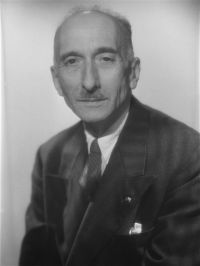
François Mauriac

François Mauriac

Thérèse (1928)

Summary

Portrait of François Mauriac François Mauriac Thérèse (1928)

To think that hardly an hour ago she wanted to plunge, in Bernard’s company, into the dark Villandraut road, between the rows of menacing pines! She cared no more for one country than another, pines or poplars, plain or ocean. Nothing interested her except living creatures, beings of blood and flesh. “It is not the stone-built city that I love, nor lectures nor museums, but the living forest that stirs within it, racked by passions more furious than any storm. The lamentations of the pines of Argelouse, at night, were so strangely moving because they seemed so nearly human.”
Source: Gutenberg

Portrait of François Mauriac François Mauriac Thérèse (1928)

How many would she have to live through, sitting at the corner of that fire-place by the dying embers? In the corners of the room the paper was peeling off the damp walls, on which could still be seen the marks of the old pictures which Bernard had taken away to adorn the drawing-room at Saint Clair,—and the desolate rusty nails. On the mantelpiece, in frames with a triple border of tortoiseshell, stood photographs as pallid as if the dead they represented had died a second death.
Source: Gutenberg

Portrait of François Mauriac François Mauriac Thérèse (1928)

When the fields of Argelouse came into sight at the turn of the road: ‘Already!’ I cried. [Pg 103] Smoke from burning grass drifted over the surface of the desolate soil now barren of its rye; through a gap in the embankment poured a herd of cattle looking like a stream of dirty milk, and they wandered off over the sandy heath. Jean had to cross the fields, to reach Vilméja, and I said: ‘I’ll come with you: I’ve been so thrilled by all this.’ But we found no more to say to each other. The rye stubble hurt me through my country sandals.
Source: Gutenberg

Get perspective with Kwize: daily news enlightened by great literature