Summary

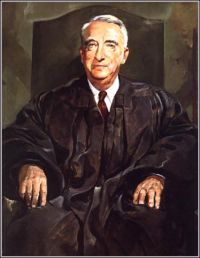
Portrait of Fred M. Vinson Fred M. Vinson 149 Madison Ave Corporation v. Asselta…

To derive the hourly rate from the weekly wage, the following formula was included:
'The hourly rates for those regularly employed more than forty (40) hours per week shall be determined by dividing their weekly earnings by the number of hours employed plus one-half of the number of hours actually employed in excess of forty (40) hours.'
Although a literal reading of the above language might seem to indicate the establishment of a variable hourly rate dependent upon the number of hours actually worked in any given week, such was not the practical construction of the parties.
Source: Wikisource

Portrait of Fred M. Vinson Fred M. Vinson 149 Madison Ave Corporation v. Asselta…

Rather, six of the hours the employee worked were always treated as overtime and compensated at the rate of one and one-half times the formula rate regardless of the total hours actually worked, thus resulting in average hourly compensation considerably in excess of the formula rate. The payment of 'overtime' compensation for non-overtime work raises strong doubt as to the integrity of the hourly rate upon the basis of which the 'overtime' compensation is calculated.
Source: Wikisource

Portrait of Fred M. Vinson Fred M. Vinson 149 Madison Ave Corporation v. Asselta…

Petitioners have argued that none of these provisions provides a conclusive demonstration that the formula rate was not the actual regular rate of pay. It is said that part-time employees were paid a pro-rata hourly rate since they had no opportunity to earn overtime compensation; that the method of paying regular employees in case of excusable absences was merely a laudable effort on the part of the employee to compensate more fully than the Act requires when an employee failed to work his scheduled week because of illness or like causes
Source: Wikisource

Get perspective with Kwize: daily news enlightened by great literature