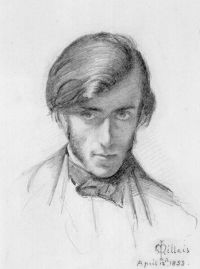
Frederic George Stephens

Frederic George Stephens

Summary

Portrait of Frederic George Stephens Frederic George Stephens,  Dictionary of National Biography (1901)

“ In succeeding years Brown's more important paintings were 'The Death of Sir Tristram,' 1863, the grim grotesqueness of which emphasised the artist's dramatising power. But it did not show those less favourable elements of his art which are marked in such designs as 'Jacob and Joseph's Coat,' where the ill-conditioned sons of the patriarch present to him the blood-stained garment of their brother, and a dog is made to smell the stain! ”
Source: Wikisource

Portrait of Frederic George Stephens Frederic George Stephens,  Dictionary of National Biography (1901)

“ Proud and sensitive, Brown was always keenly resentful of neglect or injury, real or imaginary. In fact, he was by nature a rebel, and his influence upon not a few who became eminent made him a sort of centre for many varieties of discontent. A lifelong quarrel with the Royal Academy began in 1851, when room equal to that of ten ordinary works was given in the exhibition of that year to his huge canvas, 'Chaucer reading the Legend of Custance,' but its position caused Brown dissatisfaction, which never left him. ”
Source: Wikisource

Portrait of Frederic George Stephens Frederic George Stephens,  Dictionary of National Biography (1901)

“ The firm's influence upon decorative art has been revolutionary and of the greatest value. Many of its best works in stained glass and other methods of design were by Brown.
In 1891 a number of artists (including many royal academicians) and amateurs subscribed about 900l. in order to secure for the National Gallery a picture which should adequately represent Brown's art. This compliment, paid mainly by painters to a painter, is unique, and of the highest kind.
”
Source: Wikisource

Get perspective with Kwize: daily news enlightened by great literature