Summary

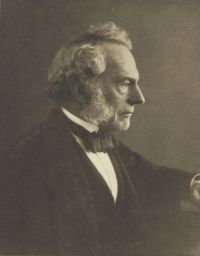
Portrait of George Gabriel Stokes George Gabriel Stokes On the Constitution of the Luminiferous Æther (1848)

When, however, we consider the wonderful simplicity of the explanations of the phænomena of polarization when we adopt the theory of transversal vibrations, and the difficulty, which to me at least appears quite insurmountable, of explaining these phænomena by any vibrations due to the condensation and rarefaction of an elastic fluid such as air, it seems reasonable to suspend our judgement, and be content to learn from phænomena the existence of forces which we should not beforehand have expected.
Source: Wikisource

Portrait of George Gabriel Stokes George Gabriel Stokes On the Constitution of the Luminiferous Æther (1848)

In order that the medium should not be dislocated, and therefore should have to be treated as an elastic solid, it is only necessary that the amount of constraint should be very small. The medium would however be what we should call a fluid, as regards the motion of solid bodies through it. The velocity of propagation of normal vibrations in our medium would be nearly the same as that of sound in water; the velocity of propagation of transversal vibrations, depending as it does on the tangential elasticity, would become very small.
Source: Wikisource

Portrait of George Gabriel Stokes George Gabriel Stokes On the Constitution of the Luminiferous Æther (1848)

The method which consists in considering the rectilinear propagation of light as resulting from the supposition that is an exact differential, and then the law of aberration as resulting from the rectilinear propagation, instead of considering the whole at once, has the advantage of showing that we are at liberty to suppose the velocity of the æther at the surface of the earth to be of any amount relatively to the surface.
Source: Wikisource

Get perspective with Kwize: daily news enlightened by great literature