“ When she came to meet me in Brighton I understood it all at once; I saw she could not restrain herself, no powers of self-restraint. Her eyes fixed on every man as if she couldn't see enough of him; her black eyes flashing. I wanted no telling—I saw it all; the moment a young man went by her eyes flashed. Here she was—'Aunt Mary, Aunt Mary, there's Meason, there's Meason, Aunt Mary, Meason, Meason, Aunt Mary.' It is not right, it can't be right; and to my thinking Maggie is just as bad—a little more sly perhaps. ”
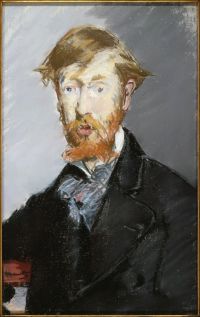
George Moore
Summary
"Spring Days," a 1888 novel by George Moore, unfolds through the intertwined lives of characters such as Frank, Maggie, Willy, and Brookes, set against locales like the Manor House and Southdown Road. The narrative explores themes of romantic involvement, societal pressures, and personal distress, as seen in Frank’s obsessive pursuit of Maggie and the tensions within familial and social circles.
Moore’s vivid descriptions of settings—green spaces, studios, and dinners—anchor the story in a realistic portrayal of late 19th-century life, while dialogues and inner conflicts reveal the fragility of human connections. The novel’s focus on emotional and ethical struggles underscores its exploration of longing and the limitations imposed by social norms.
Quotes from Spring Days (George Moore)
“ London was tall on the heavens. Regent Street was full of young men as elegant as himself driving to various pleasures, and Frank wondered what sort of dinners they would eat, what kind of women they would sit by. Then as he drove through Mayfair he thought of his own party. He wondered what the girls would think of him. Lady Seveley lived in Green Street. When he had rung the bell he listened impatiently for approaching steps, for he tingled with presentiment that he would somehow be disappointed, and he dreaded dinner by himself and his lonely lodgings. ”
“ The green was as bright as day in the moonlight and Frank watched Willy walking, his shoulders thrown back. He sighed; an undefinable, but haunting melancholy hung about Willy; he often impressed Frank as an old book—a book whose text is trite—which no one will read, and which yet continues to make its mute appeal; a something that has always missed its way, that can hardly be said to be an adequate thing to offer for any man's money, that will soon disappear somehow out of all sight and reckoning. ”
