“ Oh, Mildred!''Harold, I'm sorry. I did not think such a thing. It was good of you to come to Paris. Harold, you're not angry?''No, Mildred, I'm not angry. But all this seems strange to me: this house, these people, this paper.''I know, I know. But we cannot all think alike. We never did think alike. But that should not interfere in our affection for one another. We should love each other. We are alone in the world, father and mother both gone, only a few aunts and cousins that we don't care about.' 'Do you ever think of what father and mother would say if they knew? ”
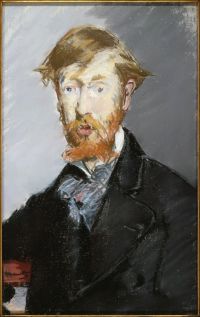
George Moore
Summary
"Celibates," by George Moore, is a novel exploring the interplay between art and personal relationships through characters like Mildred, Harold, and Elsie. Set in studios and convents, it examines themes of marriage, artistic creation, and emotional complexity, as seen in dialogues about love and existential longing.
The narrative reflects on the fleeting nature of passion and the quest for meaning, contrasting artistic ambition with the limitations imposed by societal expectations. Moore’s work highlights the tension between idealism and reality, revealing how creative endeavors and personal aspirations shape human connections.
Quotes from Celibates (George Moore)
“ My lover, my husband, come.... I have lived too long on the surface of things. I want to know life, to drink of life... and with you. Your Juliet awaits you; delay not, Romeo; come now, this very instant, or come not at all, for to-morrow instead of living fire, you may find dead ashes.'She held her arms to the night, and the scents of night mingled with the passion of her bosom. But a wind rustled the leaves in the garden, and, drawing the scarf tightly about her, she said: 'Should I have turned from him if he had come, I wonder? Why should the idea transport, and the reality extinguish? ”
“ You asked me if I liked Lord Chadwick. I was thinking. Somehow it seems to me that I rather like him, though I have no reason to do so. He thinks me crazy, but so do others; I know that my conversation bores him, he always tries to get away from me, yet somehow it seems to me that I do like him.''Is he a fast man, father, is he like Lord Chiselhurst?''He is much the same as the other men that come here. I don't think he's a bad man—no worse than other men. Is he kind to you, dear; tell me that; do you like him?''Yes, father; he and Mr. St. Clare are the men I like best here. ”
