Summary

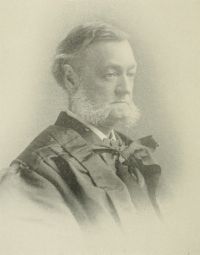
Portrait of George Shiras, Jr. George Shiras, Jr. Keystone Manufacturing Company v…

Where the patented invention consists of an improvement of machines previously existing, it is not always easy to point out what it is that distinguishes a new and successful machine from an old and ineffectual one. But when, in a class of machines so widely used as those in question, it is made to appear that at last, after repeated and futile attempts, a machine has been contrived which accomplishes the result desired, and when the patent office has granted a patent to the successful inventor, the courts should not be ready to adopt a narrow or astute construction, fatal to the grant.
Source: Wikisource

Portrait of George Shiras, Jr. George Shiras, Jr. Keystone Manufacturing Company v…

While it is true that the mere fact that a device has gone into general use, and has displaced other devices which had previously been employed for analogous uses, does not establish, in all cases, that the later device involves invention, within the meaning of the patent laws, yet such fact is always of importance, and is entitled to weight, when the question is whether the machine exhibits patentable invention.
Source: Wikisource

Portrait of George Shiras, Jr. George Shiras, Jr. Keystone Manufacturing Company v…

While it is undoubtedly established law that complainants, in patent cases, may give evidence tending to show the profits realized by defendants from use of the patented devices, and thus enable the courts to assess the amounts which the complainants are entitled to recover, yet it is also true that great difficulty has always been found, in the adjudicated cases, in applying the rule that the profits of the defendant afford a standard whereby to estimate the amount which the plaintiff is entitled to recover, and in defining the extent and limitations to which this rule is admittedly subject.
Source: Wikisource

Get perspective with Kwize: daily news enlightened by great literature