Summary

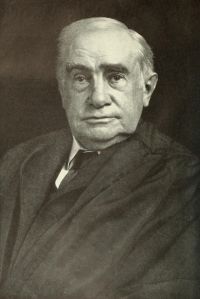
Portrait of Henry Billings Brown Henry Billings Brown McClain v. Ortmayer — Opinion of the Court

By some, 'invention' is described as the contriving or constructing of that which had not before existed; and by another, giving a construction to the patent law, as 'the finding out, contriving, devising, or creating something new and useful, which did not exist before, by an operation of the intellect.' To say that the act of invention is the production of something new and useful does not solve the difficulty of giving an accurate definition, since the question of what is new, as distinguished from that which is a colorable variation of what is old, is usually the very question in issue.
Source: Wikisource

Portrait of Henry Billings Brown Henry Billings Brown McClain v. Ortmayer — Opinion of the Court

If the generality of sales were made the test of patentability, it would result that a person, by securing a patent upon some trifling variation from previcusly known methods, might, by energy in pushing sales or by superiority in finishing or decorating his goods, drive competitors out of the market, and secure a practical monopoly, without in fact having made the slightest contribution of value to the useful arts.
Source: Wikisource

Portrait of Henry Billings Brown Henry Billings Brown McClain v. Ortmayer — Opinion of the Court

Nothing is better settled in the law of patents than that the patentee may claim the whole or only a part of his invention, and that, if he only describe and claim a part, he is presumed to have abandoned the residue to the public. The object of the patent law in requiring the patentee to 'particularly point out and distinctly claim the part, improvement, or combination which he claims as his invention or discovery' is not only to secure to him all to which he is entitled, but to apprise the public of what is still open to them.
Source: Wikisource

Get perspective with Kwize: daily news enlightened by great literature