Summary

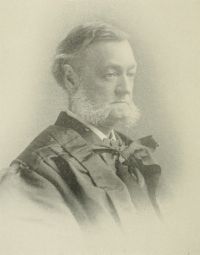
Portrait of George Shiras, Jr. George Shiras, Jr. United States Rubber Company v…

And we adopt the view of the circuit court, that 'while the policy of the law permits preferences, and such preferences as are necessarily unknown to others than those concerned, it does not permit any device which prevents the debtor from giving a like advantage to his other creditors, if he so wishes, unless such device is put in the form of a mortgage or other instrument perpetually open to inspection upon the public records.
Source: Wikisource

Portrait of George Shiras, Jr. George Shiras, Jr. United States Rubber Company v…

If , in the agreement between C. H. Fargo & Company and the preferred creditors, and the giving and taking of the preferences, there was no actual fraud upon the other creditors intended, it may not be easy to clearly state the grounds on which a court of equity may deprive the defendants in the bill of the legal advantages thus obtained.
Still, it has often been held that permitting personal property, like a stock of goods, to remain in the possession of an insolvent merchant as a basis for credit, however rightfully intended, is forbidden by the policy of the law.
Source: Wikisource

Portrait of George Shiras, Jr. George Shiras, Jr. United States Rubber Company v…

This would be a striking exercise of power by a court of equity. Thereby the advantages obtained by remedies on the law side of the court would be transferred to the complainants on its equity side; the preferred would become the unpreferred creditors, and the unpreferred become the preferred creditors.
The common law recognizes in every man the right to dispose of his property as he pleases. If he becomes insolvent, he may pay one creditor, and leave another unpaid. He may sccure one, and not another, by a transfer of assets.
Source: Wikisource

Get perspective with Kwize: daily news enlightened by great literature