Summary

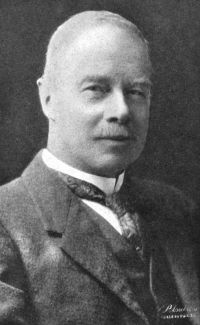
Portrait of George Vernon Hudson George Vernon Hudson An Elementary Manual of New Zealand Entomology… (1892)

Before concluding the present chapter I should like to say a few words on the subject of rearing insects, which the entomologist will soon learn to regard as by far the most interesting method of acquiring specimens for his collection.
Members of the Coleoptera are probably the most difficult insects to rear in captivity. Their larvæ may be kept in ordinary jam-pots covered with perforated zinc, and filled with earth or rotten wood. The carnivorous species must, of course, be supplied with the animals on which they feed. Beetle larvæ are often some years in attaining maturity.
Source: Wikisource

Portrait of George Vernon Hudson George Vernon Hudson An Elementary Manual of New Zealand Entomology… (1892)

The foliage of all trees and shrubs should be vigorously beaten and the insects captured as they fly out. When a moth is taken, the collector will first turn the net half way round so as to close the entrance, and then, directly the insect ceases fluttering, he should carefully place one of the little boxes over it and slip on the lid. The box is then transferred to the right-hand pocket. He will soon learn to do this without in any way damaging the insect. On arrival at home, the insects should be immediately killed in the laurel bottle.
Source: Wikisource

Portrait of George Vernon Hudson George Vernon Hudson An Elementary Manual of New Zealand Entomology… (1892)

I have occasionally tried taking a lamp into the forest to attract insects, but have not met with much success. In swampy and flat situations, no doubt, attracting by light would be very effective, especially if a powerful lamp was employed, in an exposed situation, with a sheet behind it, supported between two poles. This method has been followed with great success by many English entomologists in the fens, but has not yet been tried in the New Zealand swamps, where it would probably be the means of bringing many new and interesting species to "light."
Source: Wikisource

Get perspective with Kwize: daily news enlightened by great literature