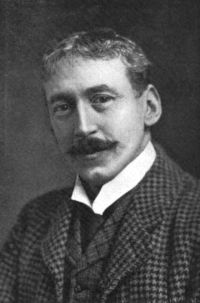
H. De Vere Stacpoole

H. De Vere Stacpoole

Summary

Portrait of H. De Vere Stacpoole H. De Vere Stacpoole The Ghost Girl

Phyl went upstairs early but she did not go to her room, she went to Juliet’s. Sorrow attracts sorrow. Juliet had always seemed more than a friend, more than a sister, even.
There were times when the ungraspable idea came before her that Juliet was herself. The vision of the Civil War sometimes came back to her and always with the hint, like a half veiled threat, that Richard the man she loved was Rupert the man she had loved, that following the dark law of duplication that works alike for types and events, forms and ideas, her history was to repeat the history of Juliet.
Source: Gutenberg

Portrait of H. De Vere Stacpoole H. De Vere Stacpoole The Ghost Girl

Tea making, and the making of tea was a solemn rite at Vernons, absorbed her whole attention, but Pinckney noticed this morning that the hand, that old, perfect, delicately shaped hand, trembled ever so slightly as it measured the tea from the tortoise-shell covered tea caddy, and that the thin lips, lips whose thinness seemed only the result of the kisses of Time, were moving as though debating some question unheard.
He recognised that the coming of Phyl had produced a great effect on Maria Pinckney. No one knew her better than he, for no one loved her so well.
Source: Gutenberg

Portrait of H. De Vere Stacpoole H. De Vere Stacpoole The Ghost Girl

She sat now watching the garden growing ghostly bright, the sun dial becoming a moon dial, the carnations touched by that stillness and mystery which is held only in the light of the moon and the light of the dawn.
Phyl found herself sitting between two worlds. In the light of the northern moon in summer there is a vague rose tinge to be caught at times and in places when it falls full on house wall or the road on which one is walking. The piazza to-night had this living and warm touch.
Source: Gutenberg

Get perspective with Kwize: daily news enlightened by great literature