Summary

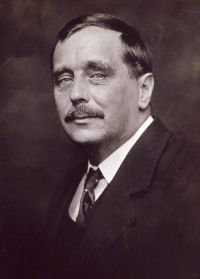
Portrait of H. G. Wells H. G. Wells First and Last Things: A Confession of Faith and Rule of Life

Such intercourse and community as they have is only a dawn. We look towards the day, the day of the organized civilized world state. The first clear intimation of that conscious synthesis of human thought to which I look, the first edge of the dayspring, has arisen—as Socialism, as I conceive of Socialism. Socialism is to me no more and no less than the awakening of a collective consciousness in humanity, a collective will and a collective mind out of which finer individualities may arise forever in a perpetual series of fresh endeavours and fresh achievements for the race.
Source: Gutenberg

Portrait of H. G. Wells H. G. Wells First and Last Things: A Confession of Faith and Rule of Life

And with the human imagination all these elementary instincts, of the flesh, of curiosity, of self-assertion, become only the basal substance of a huge elaborate edifice of secondary motive and intention. We live in a great flood of example and suggestion, our curiosity and our social quality impel us to a thousand imitations, to dramatic attitudes and subtly obscure ends. Our pride turns this way and that as we respond to new notes in the world about us. We are arenas for a conflict between suggestions flung in from all sources, from the most diverse and essentially incompatible sources.
Source: Gutenberg

Portrait of H. G. Wells H. G. Wells First and Last Things: A Confession of Faith and Rule of Life

If Socialism is only a conflict with poverty, Socialism is nothing. But I hold that Socialism is and must be a battle against human stupidity and egotism and disorder, a battle fought all through the forests and jungles of the soul of man. As we get intellectual and moral light and the realization of brotherhood, so social and economic organization will develop. But the Socialist may attack poverty for ever, disregarding the intellectual and moral factors that necessitate it, and he will remain until the end a purely economic doctrinaire crying in the wilderness in vain.
Source: Gutenberg

Get perspective with Kwize: daily news enlightened by great literature