Summary

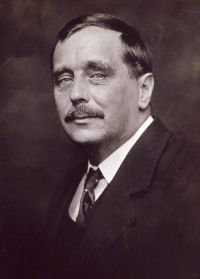
Portrait of H. G. Wells H. G. Wells Washington and the Riddle of Peace

When I think of an Association of Nations I think, therefore, of a sort of club or brotherhood, not of every state in the world but of the peoples who speak English, French, German, Spanish, Italian and Japanese, as the big brotherhood of the world, with such states as Holland and Norway and Bohemia, and so forth, great in quality if not great in power and entirely sympathetic by training and tradition, associated with them in a great bond for two ends; for peace among themselves and for restraint and patience toward the rest of mankind.
Source: Gutenberg

Portrait of H. G. Wells H. G. Wells Washington and the Riddle of Peace

Coming as I do from Europe to America, I am amazed at the apparent buoyancy and abundance of New York. The place seems to possess an inexhaustible vitality. But this towering, thundering, congested city, with such a torrent of traffic and such a concourse of people as I have never seen before, is, after all, the European door of America; it draws this superabundant and astounding life from trade, from a trade whose roots are dying.
When one looks at New York its assurance is amazing; when one reflects we realize its tremendous peril.
Source: Gutenberg

Portrait of H. G. Wells H. G. Wells Washington and the Riddle of Peace

New York and the Eastern cities, so far as the overseas traffic goes, may suffer exceptionally. For them there may be less power of recovery, for with the fall of Europe into barbarism, the centre of American interests will shift to the interior. But after a series of crises, a lot of business failures and so on, I do not see why the United States—if there is no war with Japan—very little reduced from the large splendor of its present habits, should not still be getting along in a fashion. America is not tied up to the European system, to live and die with it, as France or Britain is tied.
Source: Gutenberg

Get perspective with Kwize: daily news enlightened by great literature