Summary

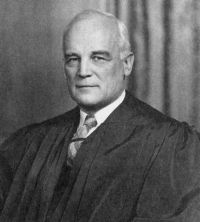
Portrait of Harold Hitz Burton Harold Hitz Burton Commissioner of Internal Revenue v…

Thus, where money or property is placed in trust to pay the income to an individual during life, and then to pay or deliver the same to a charitable corporation, or apply the principal to a charitable purpose, the charitable bequest or devise forms the basis for a deduction. The amount of the deduction, in such case, is the value, at the date of the decedent's death, of the remainder interest in the money or property which is devised or bequeathed to charity.
Source: Wikisource

Portrait of Harold Hitz Burton Harold Hitz Burton Commissioner of Internal Revenue v…

It relates to provisions whereby funds may be diverted in whole or in part to noncharitable uses, and it limits the tax deduction to that portion of each fund that cannot be so diverted. Where the principal of a bequest to charity thus may be invaded for private purposes, it is only the ascertainable and assured balance of the bequest to charity that is recognized for a tax deduction.
Source: Wikisource

Portrait of Harold Hitz Burton Harold Hitz Burton Commissioner of Internal Revenue v…

If she did so, her action would cancel the possibility that charity would receive anything from the bequest, but it would not cancel the tax deduction already allowed to the estate. To whatever extent any person can defeat the fulfillment of any condition upon which a benefit to charity depends, to that extent the actuarial estimate that such benefit will reach charity is less dependable.
Source: Wikisource

Get perspective with Kwize: daily news enlightened by great literature