Summary

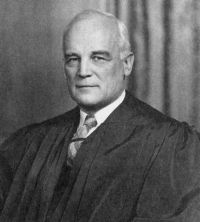
Portrait of Harold Hitz Burton Harold Hitz Burton United States v. Sharpnack — Opinion of the Court

There is no doubt that Congress may validly adopt a criminal code for each federal enclave. It certainly may do so by drafting new laws or by copying laws dufining the criminal offenses in force throughout the State in which the enclave is situated. As a practical matter, it has to proceed largely on a wholesale basis. Its reason for adopting local laws is not so much because Congress has examined them individually as it is because the laws are already in force throughout the State in which the enclave is situated.
Source: Wikisource

Portrait of Harold Hitz Burton Harold Hitz Burton United States v. Sharpnack — Opinion of the Court

The basic legislative decision made by Congress is its decision to conform the laws in the enclaves to the local laws as to all offenses not punishable by any enactment of Congress. Whether Congress sets forth the assimilated laws in full or assimilates them by reference, the result is as definite and as ascertainable as are the state laws themselves.
Having the power to assimilate the state laws, Congress obviously has like power to renew such assimilation annually or daily in order to keep the laws in the enclaves current with those in the States.
Source: Wikisource

Portrait of Harold Hitz Burton Harold Hitz Burton United States v. Sharpnack — Opinion of the Court

Rather than being a delegation by Congress of its legislative authority to the States, it is a deliberate continuing adoption by Congress for federal enclaves of such unpre-empted offenses and punishments as shall have been already put in effect by the respective States for their own government. Congress retains power to exclude a particular state law from the assimilative effect of the Act.
Source: Wikisource

Get perspective with Kwize: daily news enlightened by great literature