Summary

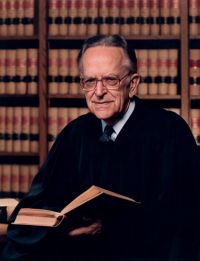
Portrait of Harry Blackmun Harry Blackmun Caplin Drysdale Chartered v. United States…

The Government will be ever tempted to use the forfeiture weapon against a defense attorney who is particularly talented or aggressive on the client's behalf the attorney who is better than what, in the Government's view, the defendant deserves. The specter of the Government's selectively excluding only the most talented defense counsel is a serious threat to the equality of forces necessary for the adversarial system to perform at its best.
Source: Wikisource

Portrait of Harry Blackmun Harry Blackmun Caplin Drysdale Chartered v. United States…

When the Government insists upon the right to choose the defendant's counsel for him, that relationship of trust is undermined: counsel is too readily perceived as the Government's agent rather than his own. Indeed, when the Court in Faretta held that the Sixth Amendment prohibits a court from imposing appointed counsel on a defendant who prefers to represent himself, its decision was predicated on the insight that " [t] o force a lawyer on a defendant can only lead him to believe that the law contrives against him."
Source: Wikisource

Portrait of Harry Blackmun Harry Blackmun Caplin Drysdale Chartered v. United States…

Yet it is in the preconviction period that the forfeiture threat (or the force of a § 853 (e) (1) restraining order) deprives the defendant of use of the assets to retain counsel. The Government's interest in the assets at the time of their restraint is no more than an interest in safeguarding fictive property rights, one which hardly weighs at all against the defendant's formidable Sixth Amendment right to retain counsel for his defense.
Source: Wikisource

Get perspective with Kwize: daily news enlightened by great literature