Summary

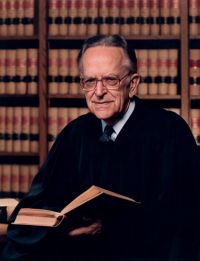
Portrait of Harry Blackmun Harry Blackmun Lehnert v. Ferris Faculty Association…

That an exclusive bargaining representative has gone beyond the bare requirements of the law in representing its constituents through employee contributions does not automatically mean that the Constitution has been violated, at least where the funded activities have not transgressed state provisions. "The very nature of the free-rider problem and the governmental interest in overcoming it require that the union have a certain flexibility in its use of compelled funds."
Source: Wikisource

Portrait of Harry Blackmun Harry Blackmun Lehnert v. Ferris Faculty Association…

No greater relationship is necessary in the collective-bargaining context.
This rationale does not extend, however, to the expenses of litigation that does not concern the dissenting employees' bargaining unit or, by extension, to union literature reporting on such activities. While respondents are clearly correct that precedent established through litigation on behalf of one unit may ultimately be of some use to another unit, we find extra-unit litigation to be more akin to lobbying in both kind and effect. We long have recognized the important political and expressive nature of litigation.
Source: Wikisource

Portrait of Harry Blackmun Harry Blackmun Lehnert v. Ferris Faculty Association…

The burden upon freedom of expression is particularly great where, as here, the compelled speech is in a public context. By utilizing petitioners' funds for political lobbying and to garner the support of the public in its endeavors, the union would use each dissenter as "an instrument for fostering public adherence to an ideological point of view he finds unacceptable."
Source: Wikisource

Get perspective with Kwize: daily news enlightened by great literature