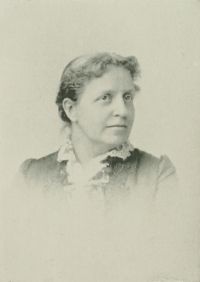
Helen Stuart Campbell

Helen Stuart Campbell

Summary

Portrait of Helen Stuart Campbell Helen Stuart Campbell Anne Bradstreet and her time (1891)

Hardly a town in New England holds stronger reminders of the past, or has a more intensely New England atmosphere than Andover, wherein the same decorous and long-winded discussions of fate, foreknowledge and all things past and to come, still goes on, as steadily as if the Puritan debaters had merely transmigrated, not passed over, to a land which even the most resigned and submissive soul would never have wished to think of as a "Silent Land."
Source: Wikisource

Portrait of Helen Stuart Campbell Helen Stuart Campbell Anne Bradstreet and her time (1891)

No poet has enduring place whose work has not been the voice of the national thought and life in which he has had part. Theology, politics, great questions of right, all the problems of human life in any age may have, in turn, moulded the epic of the period; but, from Homer down, the poet has spoken the deepest thought of the time, and where he failed in this has failed to be heard beyond his time. With American poets, it has taken long for anything distinctively American to be born.
Source: Wikisource

Portrait of Helen Stuart Campbell Helen Stuart Campbell Anne Bradstreet and her time (1891)

IT was perhaps Anne Bradstreet's youth, and a sense that she could hardly criticise a judgment which had required the united forces of every church in the Colony to pronounce, that made her ignore one of the most stormy experiences of those early days, the trial and banishment of Anne Hutchinson. Her silence is the more singular, because the conflict was a purely spiritual one, and thus in her eyes deserving of record. There can be no doubt that the effect on her own spiritual and mental life must have been intense and abiding.
Source: Wikisource

Get perspective with Kwize: daily news enlightened by great literature