Puritan

Definition and stakes

John Richard Green,  History of the English People, Volume V

“ Even in the still calm beauty of a life such as this we catch the sterner tones of the Puritan temper. The very height of the Puritan's aim, the intensity of his moral concentration, brought with them a loss of the genial delight in all that was human which gave its charm to the age of Elizabeth. "If ever God instilled an intense love of moral beauty into the mind of any man," said the great Puritan poet, "he has instilled it into mine." ”
Source: Gutenberg

R. H. Tawney,  Religion and the rise of capitalism (1926)

“ If the inward and spiritual grace of Puritanism eludes the historian, its outward and visible signs meet him at every turn, and not less in market-place and counting-house and camp than in the student’s chamber and the gathering of the elect for prayer. For to the Puritan, a contemner of the vain shows of sacramentalism, mundane toil becomes itself a kind of sacrament. Like a man who strives by unresting activity to exorcise a haunting demon, the Puritan, in the effort to save his own soul, sets in motion every force in heaven above or in the earth beneath. ”
Source: Gutenberg

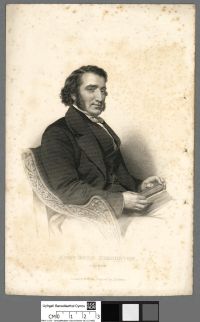
Portrait of John Stoughton John Stoughton,  Ecclesiastical History of England…

“ So it came to pass that, under the name of Puritan, all religion was branded, and under a few hard words against Jesuits, all Popery was countenanced; whoever squared his actions by any rule, either divine or human, he was a Puritan; whoever would be governed by the King's laws, he was a Puritan; he that would not do what other men would have him to do, was a Puritan. The masterpiece of the enemy was to make the truly religious suspected of the whole kingdom. ”
Source: Gutenberg

Get perspective with Kwize: daily news enlightened by great literature