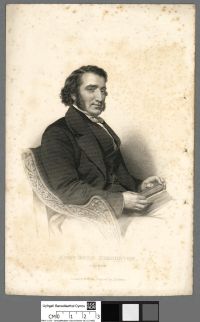
John Stoughton

Biographical details

Portrait of John Stoughton John Stoughton Ecclesiastical History of England… (1870)

It is impossible for us to set the bounds to spiritual things, to stint that spirit in ourselves or others which is a fountain of Divine light and life in all regenerated souls, continually sending forth new streams, and running along with a fresh succession of waters without any stop or limit. We are too proud to understand the condescensions, too low to take the height, too shallow to fathom the depth, too narrow to measure the breadth, too short to reach the length of the Divine truth and goodness, and the various communications of themselves to us.
Source: Gutenberg

Portrait of John Stoughton John Stoughton Ecclesiastical History of England…

A crisis had come, such as must come in the wake of great revolutions, when, however firmly we may maintain Locke's principles of the origin of government, we find people in such a state of perfect helplessness, and former rulers so utterly destitute of power to rule, so incapable, so inevitably rushing to destruction, dragging the whole country along with them—that in mercy to mankind we feel all theories woven of the wisest webs must be laid aside, and a competently skilful hand be allowed to gather up the scattered threads in such fashion as it may be able.
Source: Gutenberg

Portrait of John Stoughton John Stoughton Ecclesiastical History of England… (1874)

But all is changed when we turn to the theological literature of King William’s days—Tillotson, Burnet, Bentley, Locke. We miss Anglican and Puritan sweep of thought, minuteness of detail, intensity of utterance, and glow of passion. There is no depth of colour, all is pale; no flash of fire, all is cold. We meet with regularity, order, smoothness. It is the age of Renaissance in Divinity.
Source: Gutenberg

Get perspective with Kwize: daily news enlightened by great literature