Summary

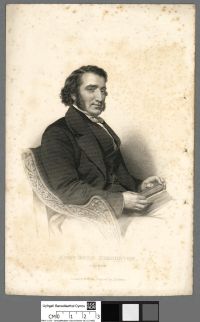
Portrait of John Stoughton John Stoughton Ecclesiastical History of England… (1874)

It is not a particular sect or opinion that we contend for, but the very being of a Church and of religion. Whether there shall be any faith that shall oblige to our own hindrance? Whether religion, which ought to add to its sacredness, shall be made a pretence for violating it? Whether our Holy Mother, the Church of England, which hath been famous for her loyalty, shall now be as infamous for her apostacy? Whether there be any understanding men who, in this incredulous age, can find in their hearts to venture the greatest worldly interest for their religion
Source: Gutenberg

Portrait of John Stoughton John Stoughton Ecclesiastical History of England… (1874)

But all is changed when we turn to the theological literature of King William’s days—Tillotson, Burnet, Bentley, Locke. We miss Anglican and Puritan sweep of thought, minuteness of detail, intensity of utterance, and glow of passion. There is no depth of colour, all is pale; no flash of fire, all is cold. We meet with regularity, order, smoothness. It is the age of Renaissance in Divinity.
Source: Gutenberg

Portrait of John Stoughton John Stoughton Ecclesiastical History of England… (1874)

His answer to the request for a Parliament, according to the report of the Bishop of Rochester, ran in these words: “What you ask of me, I most passionately desire, and I promise you upon the faith of a king, that I will have a Parliament, and such an one as you ask for, as soon as ever the Prince of Orange has quitted this realm. For how is it possible a Parliament should be free in all its circumstances, as you petition for, whilst an enemy is in the kingdom, and can make return of near a hundred voices?”
Source: Gutenberg

Get perspective with Kwize: daily news enlightened by great literature